Poké Radar Tips
The primary goal of manipulating the Poké Radar is to find high IV Shiny Pokémon by building up a long chain. A common target is Ditto because there are few ways to obtain a breeding Ditto natively; the only other method is the Underground. It is important to understand how radar chaining works to give yourself the best possible chance of keeping an active chain alive.
Figure 1 - About Poké Radar Chains

After using the Poké Radar in a large grass patch, four of the surrounding patches will begin rustling around the player. Encountering any of the Pokémon found inside the rustling grass will begin a chain of the encountered species. When the battle ends, the game decides the likelihood the chain continuing based on how you decided to play.
What is considered "optimal play"?
- Starting a chain using a grass patch that is 4 tiles away from the player in any direction (including diagonal).
- Capturing all Pokémon encountered during your chain.
- Continuing to encounter Pokémon in grass patches that are 4 tiles away from the player in any direction.
- Avoiding any of the following, which are guaranteed to end your chain:
- Encountering a Pokémon through a normal wild encounter. Use Repels to avoid random wild encounters.
- Running from a Pokémon encountered using the Poké Radar.
- Riding your bike while the Poké Radar music is active.
- Starting a Trainer Battle while the Poké Radar music is active.
- Leaving the area or entering any loading zone, including the Union Room or Grand Underground.
- If you find that there are no shaking grass patches that are 4 tiles away, recharge the Poké Radar by taking 50 steps and use it again. Be careful not to accidentally step on any of the current shaking grass patches. Repeat until one appears.
Following these rules will give us the maximum 93% chance of the chain continuing once the battle ends. This means that even with optimal play, there is still a 7% chance the chain will randomly break, but this can be avoided with RNG manipulation!
Radar Bonuses
As the chain length increases, the game boosts shiny rates and the number of guaranteed max IVs the next encountered Pokémon will have. Detailed information about shiny rates for each chain length can be found on Serebii's BDSP Poké Radar page, but most notably...
- At a chain of 19, the next encountered Pokémon will have 1 guaranteed max IV.
- At a chain of 29, the next encountered Pokémon will have 2 guaranteed max IVs.
- At a chain of 39, the next encountered Pokémon will have 3 guaranteed max IVs.
- At a chain of 99, the next encountered Pokémon will have 5 guaranteed max IVs.
- When a chain reaches 39, the chances of finding a shiny Pokémon are boosted to 1/200.
- Once a chain reaches 40 or above, the chances of finding a shiny Pokémon caps out at 1/99.
Keep this information in mind as it may influence how you decide to play. For example, you may decide to reach a chain of 39 and repeatedly recharge the Poké Radar until you find a shiny patch, as this will also grant the encountered Shiny Pokémon a bonus of 3 guaranteed max IVs.
Figure 2 - In-Game Setup
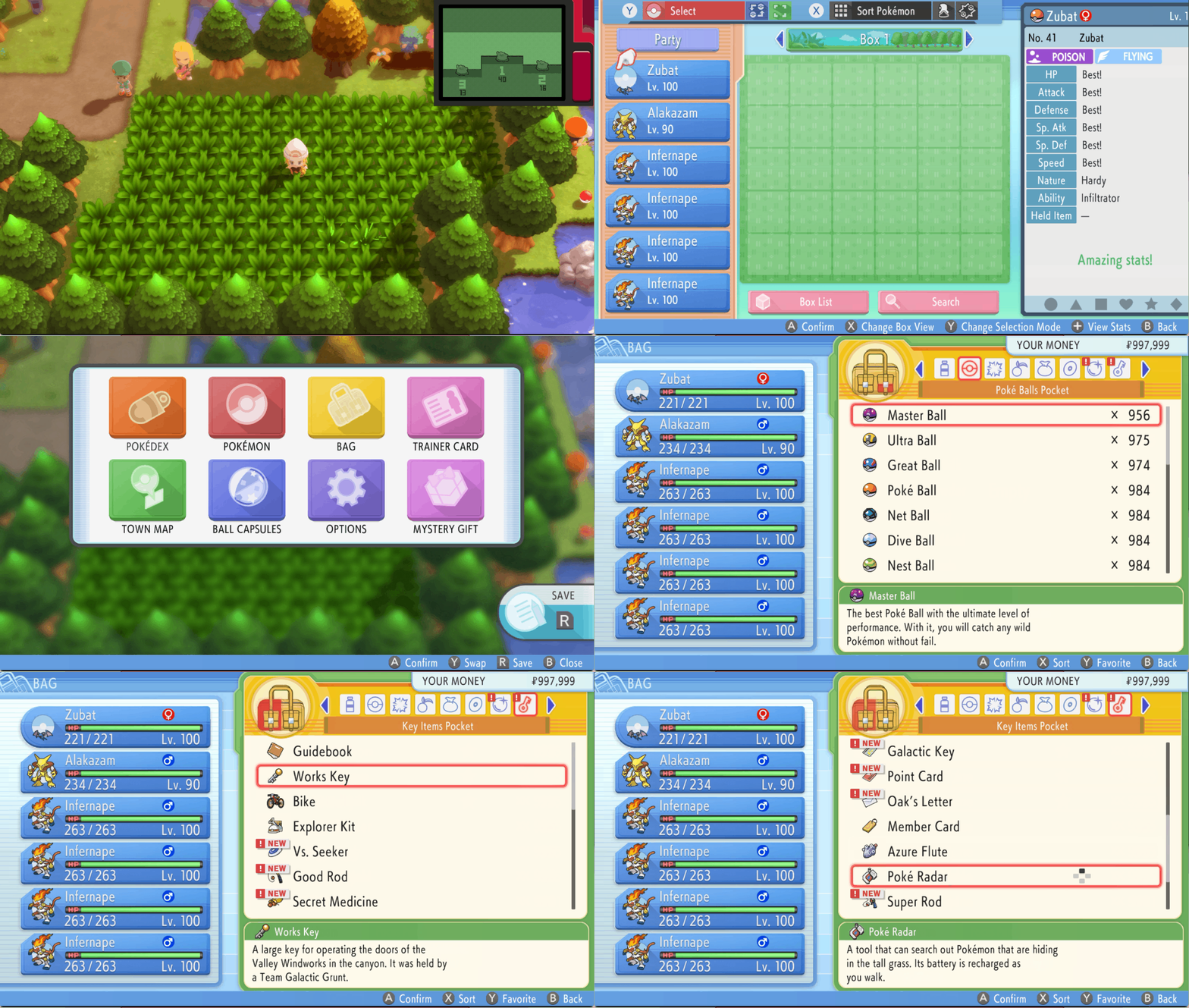
You will need to do some initial preparation work before getting started with the RNG manipulation. The setup required for a seamless experience (particularly with chain length manipulation) might seem oddly specific, but try to follow these recommendations closely.
It may be difficult to gather all of the ideal items and Pokémon required to optimize the RNG experience. Since everyone following this guide should have Switch Custom Firmware, you can consider editing your save file to meet the requirements below using PKHeX (instructions on how to edit your save file will not be covered in this guide).
Bag Setup
The goal with the bag is to have enough supplies to catch every Pokémon we encounter while building the chain. We also want to avoid running into any Pokémon that will break the chain. We recommend:
- Poké Radar and Pokétch app acquired from Professor Oak at Ramanas Park after completing the main story.
- Plenty of good Poké Balls so you can capture Pokémon from Radar encounters easily. You will need at least as many as the length of the chain you are trying to achieve. Depending on play preferences, you can consider stocking up on Quick Balls, Repeat Balls, or Master Balls.
- Plenty of Repels, ideally Max Repels, to avoid unintentionally encountering a random Wild Pokémon.
- Healing items if there is a chance of failing a catch and being attacked.
- Poké Radar as your only registered item to avoid unintentionally performing actions like mounting the bike. This is optional but highly recommended.
Box Setup
Ensure that the number of empty slots in your PC Boxes exceeds your desired chain length, as in order to build the Poké Radar chain we will need to catch every single encounter.
Party Setup
This party setup prevents party members from leveling up, ensures that the battle finishes on the experience gain screen, and keeps Repel effective with a high-level lead Pokémon. We recommend:
- A full team of 6 Pokémon so newly-caught Pokémon go to your box instead of your party. Low level Pokémon in your party can gain Exp. Points and level up, which causes problems for RNG manipulation.
- A level 100 lead Pokémon that will not gain experience and will keep your Repel working.
- Ideally, your lead Pokémon should be a level 100 Zubat. Using a Zubat causes the RNG state to advance more slowly than when using most other Pokémon. (We suspect this is due to it not having a blinking animation since it has no eyes!)
- The lead Pokémon can be switched to a Pokémon with the ability Synchronize when it is time to manipulate the encounter instead of the chain.
- At least 1 fainted Pokémon of any level below 100. This will allow the experience gain screen to appear with
+0gained, but we can avoid the level up at the end of a battle. - Any other 4 Pokémon that are either fainted or level 100 to avoid the problems previously stated.
- A Pokémon with the Synchronize ability that is higher level than the Pokémon on the route to avoid triggering an unwanted encounter when Repel is active. This can be one of your party members if it meets the previous requirements.
Note that you can safely access the PC Boxes remotely while a radar chain is active. You can make use of this feature to swap around party members that are unsuitable or if you need to pick up your Synchronize Pokémon.
Information - At this stage, you should have a good understanding of how Poké Radar chains work and how to set up your game for RNG manipulating the Poké Radar. Next, you can move on to learning about the actual RNG manipulation process. We recommend first learning how to calibrate the encounter delay for the area you will be chaining in so you can consistently manipulate the stats of Poké Radar encounter once you reach your desired chain length.
You can refer back to this page if you need a refresher on Poké Radar chain mechanics or what the ideal in-game setup looks like. The next page will open in a new tab, so you can easily switch back and forth between the two pages as needed.